
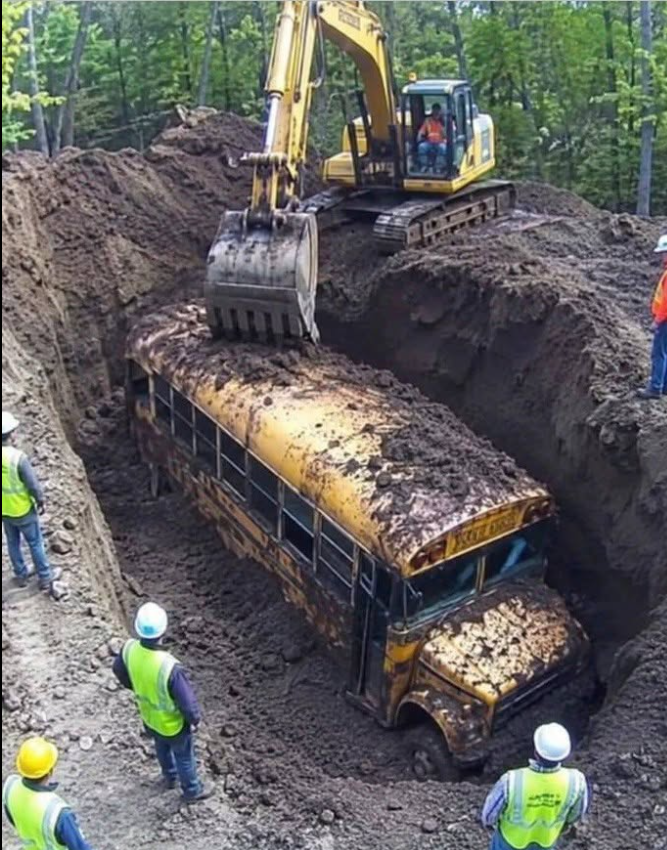
“She took them into the old mine ventilation tunnels,” Lana said softly, reading the final paragraph written in the margins of the page. “The tunnel network went completely through the ridge to the high plateau on the other side, well above the toxic basin.”
Miller adjusted his glasses, scanning the surrounding terrain through the shattered side windows of the bus. “That explains why they left the vehicle. But it doesn’t explain how a full-sized school bus ended up six feet underground, covered in pristine forest topsoil.”
Lana turned the page. A loose folded map fell from the back pocket of the journal. It was an old topographical survey of the county, marked with red ink. A thick line traced the path from the abandoned mine portal across the ridge to an isolated homestead five miles east.
At the bottom of the map, a note in different handwriting—crisp and authoritative—explained the rest of the mystery.
When regional officials realized the extent of the industrial leak that morning in 1986, fear of mass panic and economic ruin led a small group of local authorities to execute a hasty cover-up. They sealed off the forest roads, declared the area a hazard zone under the guise of a natural gas pocket, and attempted to hide all evidence of negligence.
When they discovered the stalled school bus abandoned on the trail, the corrupt site directors panicked. Believing the passengers had succumbed to the heavy gas in the low basin, they used heavy earthmoving equipment from the mining site to bury the bus deep inside a natural trench, completely covering the evidence before federal investigators could arrive. They assumed the missing class was lost forever in the deep forest.
They never checked the high ridge. They never knew that Eleanor Delaney had already guided every single child safely through the mountain tunnel hours before the machinery arrived.
Lana pulled her phone from her pocket and cross-referenced the coordinates written on the edge of the map. The homestead marked on the paper still existed today, resting peacefully just beyond the county border in a quiet farming community that had remained untouched by the development surrounding Morning Lake.
Two hours later, Lana and Miller pulled up the gravel driveway of the secluded farm. An old white farmhouse sat framed by giant oak trees, its porch decorated with potted ferns and child-sized rocking chairs.
Sitting on the porch step was an elderly woman with silver hair held back in a neat bun, reading a book in the warm afternoon sun. As the investigators stepped out of their vehicle, she set her book down and looked up with calm, knowing eyes.
“I wondered when someone would finally dig up that old bus,” Eleanor Delaney said with a faint, gentle smile. “We waited forty years for the truth to catch up.”
Over the next hour, Miss Delaney revealed the rest of the story. After guiding the children through the mountain tunnel to safety, she reached the homestead of a trusted local doctor. Realizing the extent of the corruption in Morning Lake and fearing for the children’s safety if they returned while the company controlled the narrative, the local community protected the group.
Federal authorities were quietly notified months later under strict witness protection arrangements. The children were safely reunited with their families under relocated identities in neighboring states, far from the influence of the corporation that had tried to bury the event.
Eleanor had chosen to stay behind on the quiet farm, keeping guard over the memory of that day and holding the full records until the earth finally gave up its buried secret.
Lana looked out over the quiet fields surrounding the house, feeling the heavy burden of a four-decade tragedy finally lift from the town of Morning Lake. The mystery was no longer a story of loss, but a testament to courage, resilience, and the relentless endurance of the truth.




