
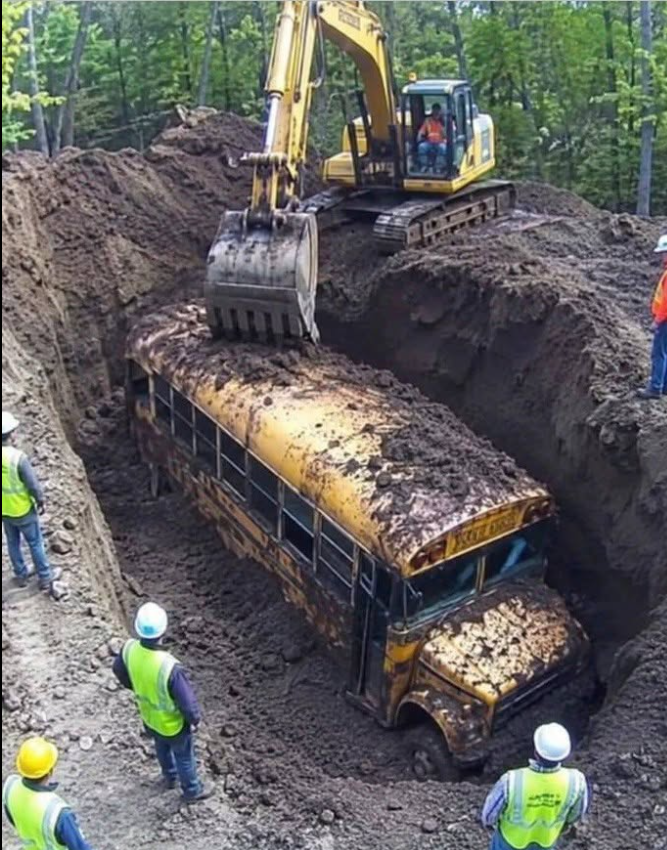
Miller leaned over her shoulder as she unlatched the cover. The first few dozen pages contained routine lesson plans and attendance logs from April 1986. But as Lana flipped toward the middle of the book, the entry dated May 14, 1986—the day of the disappearance—stopped both investigators in their tracks.
The entry began with a detailed description of the morning drive. Miss Delaney wrote about the clear sky, the excitement of the students, and the scenic detour they took along the old logging road to avoid construction on the main highway. But three paragraphs down, the handwriting shifted from tidy script to jagged, hurried strokes.
According to the journal, less than an hour into the detour, the bus engine began to sputter and overheat. The driver pulled over near the entrance of the abandoned Pine Ridge Iron Mine, a facility that had been closed since the late 1960s. While waiting for the engine to cool, Miss Delaney noticed a strange, thick haze drifting down from the ridge above—a sharp, pungent plume carrying a harsh metallic odor.
It wasn’t a forest fire, nor was it simple fog. Unknown to the public in 1986, a nearby industrial storage site had suffered a severe chemical vault failure early that morning. The toxic vapor was heavier than air, settling rapidly into the low valleys and drainage basins surrounding Morning Lake.
Recognizing the immediate danger as the air grew difficult to breathe, Miss Delaney made a crucial decision. She knew that attempting to drive back through the low valley road would keep them directly in the path of the sinking chemical cloud. Continuing toward Morning Lake was equally impossible.
The journal detailed how she gathered all fifteen children, instructed them to leave their heavy lunchboxes and backpacks behind to move faster, and led them on foot toward the elevated ridge trail leading east toward the county line…..




