
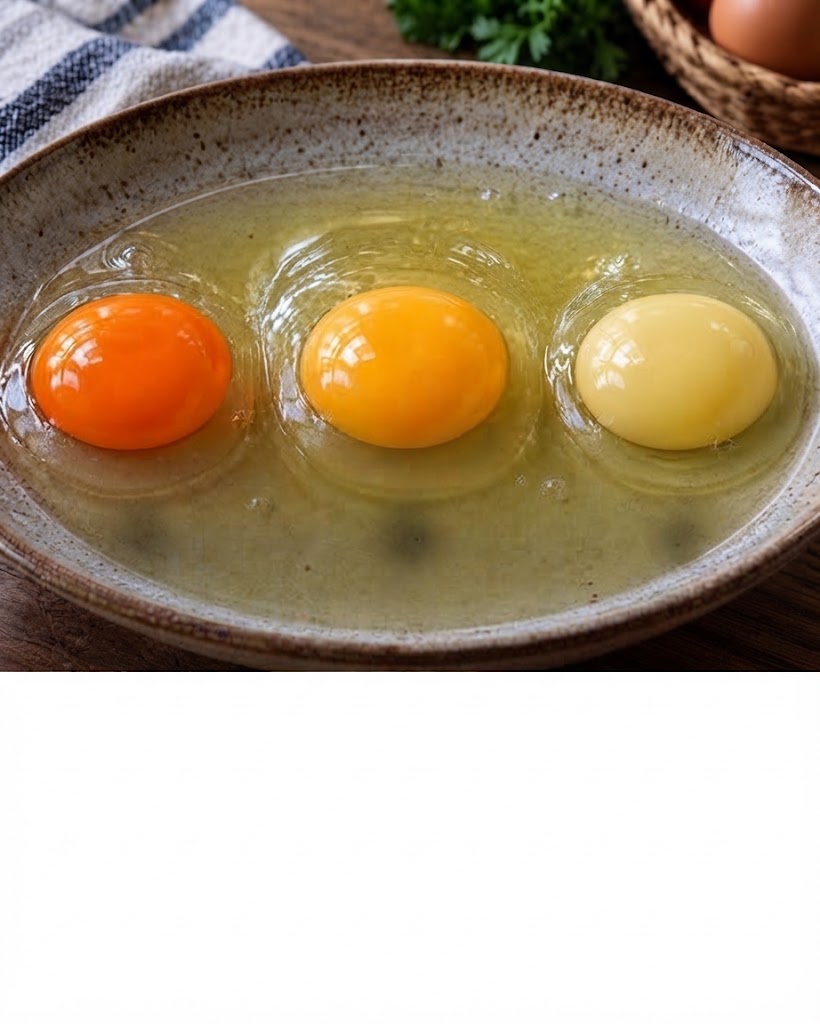
That specific pigment-driven twist completely changes how we evaluate egg quality, because the color intensity is primarily governed by carotenoids—fat-soluble organic compounds like xanthophylls, lutein, and zeaxanthin present in plant tissues. When a chicken grazes on fresh pasture filled with green grass, alfalfa, marigold petals, and insects, its diet becomes packed with natural xanthophylls, yielding a dark orange yolk. Conversely, a hen raised in a commercial indoor facility fed predominantly on a monotonous diet of white corn, wheat, or standard soy meal will produce a pale yellow yolk like number one in the image. Therefore, the color variation from pale yellow to deep orange simply maps out the diversity of the bird’s diet rather than its inherent health status or disease resistance.
The Science of Carotenoids and Hen Diet
Evaluating which egg comes from a healthy chicken requires separating the concept of dietary richness from clinical health. A chicken can be completely healthy, disease-free, and well-cared for in a modern barn setting while eating a regulated grain diet that naturally produces light-colored yolks. At the same time, a backyard hen foraging outside might consume plants rich in carotenoids that tint her yolks a striking deep orange. Both birds can exhibit optimal physiological health, yet their eggs look entirely different in a frying pan.
Consumers frequently mistake deep coloration for higher protein content, superior vitamin levels, or lower cholesterol, but nutritional studies show that the core macronutrient profile—including protein, healthy fats, and basic minerals—remains remarkably consistent across different yolk colors. While pasture-raised hens foraging on diverse vegetation often yield eggs with higher concentrations of specific fat-soluble vitamins and omega-3 fatty acids due to their varied outdoor diet, the color itself remains merely a marker of plant pigment ingestion. Recognizing this distinction helps shoppers make informed choices without falling prey to clever food labeling tricks that exploit visual biases.
Nutritional Realities Behind Yolk Variations
When examining which egg comes from a healthy chicken, it is essential to look at the entire package: the shell strength, the albumen thickness, and the structural integrity of the yolk membrane. A truly healthy hen produces eggs with strong calcium shells and thick, gelatinous whites that hold their shape tightly when cracked, regardless of whether the center leans toward a pale lemon or a deep amber.
- Pale Yellow Yolks: Typically resulting from a diet rich in grains like white corn or wheat, these yolks are entirely normal, safe, and nutritious, contradicting the myth that they indicate sick or mistreated caged birds.
- Medium Golden Yolks: Often found in mixed-feed or cage-free systems, these represent a balanced diet containing a moderate amount of greens, yellow corn, and standard commercial feed formulations.
- Vibrant Orange Yolks: Commonly produced by pasture-raised or backyard chickens with constant access to fresh grass, clover, leafy plants, and bugs rich in natural pigments.
Navigating the grocery aisle with these biological insights empowers you to choose products that align with your nutritional goals and ethical preferences. While pasture-raised eggs yielding deeper yolks often offer a superior environmental footprint and enhanced micronutrient profiles due to outdoor foraging, understanding the science ensures you never judge a chicken’s wellness solely by the color of its yolk.
Frequently Asked Questions
- Does a darker orange yolk mean the egg has less cholesterol? No, cholesterol levels in egg yolks remain largely consistent regardless of color, as they are determined by the bird’s internal metabolism and base genetics rather than the plant pigments it consumes.
- Can artificial colorants be added to chicken feed to fake dark yolks? Yes, some conventional egg producers add natural or synthetic pigments like marigold extract or synthetic carotenoids to feed formulations to artificially darken yolks and appeal to consumer preferences for farm-fresh aesthetics.
- Are pale yellow eggs unhealthy to eat? Absolutely not; pale yellow eggs are completely safe, highly nutritious, and packed with essential amino acids, choline, and vitamins as long as the laying hen is healthy and properly nourished.
Thank you for taking the time to explore the fascinating science behind egg production and avian nutrition with us! We hope this guide clears up common grocery store confusion and helps you make the most informed choices for your daily wellness journey. Stay curious, eat well, and enjoy your next healthy breakfast! 🍳🌿✨




