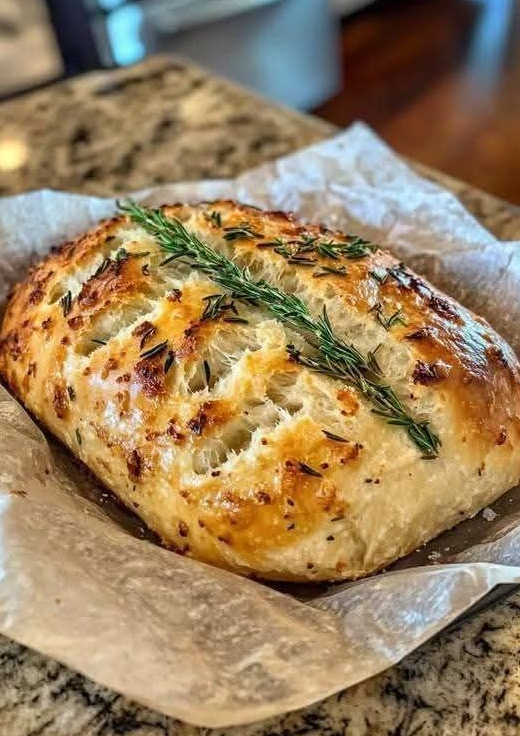
Rustic no-knead rosemary garlic bread recipe: The ultimate guide to achieving a bakery-quality loaf in your own kitchen with minimal effort. This rustic no-knead rosemary garlic bread recipe relies on time rather than physical labor to develop a perfect crumb and a golden, shattered-glass crust. 🌿
Table of Contents
The Magic of the Rustic No-Knead Rosemary Garlic Bread Recipe
The beauty of a rustic no-knead rosemary garlic bread recipe lies in the science of long fermentation. Instead of spending twenty minutes kneading dough to develop gluten, we allow a slow rise to do the work for us. This method creates a complex, slightly tangy flavor profile and a characteristic airy interior that is often hard to achieve with standard quick-bread methods. By infusing the dough with fresh herbs and roasted garlic, you elevate a simple staple into a gourmet centerpiece.
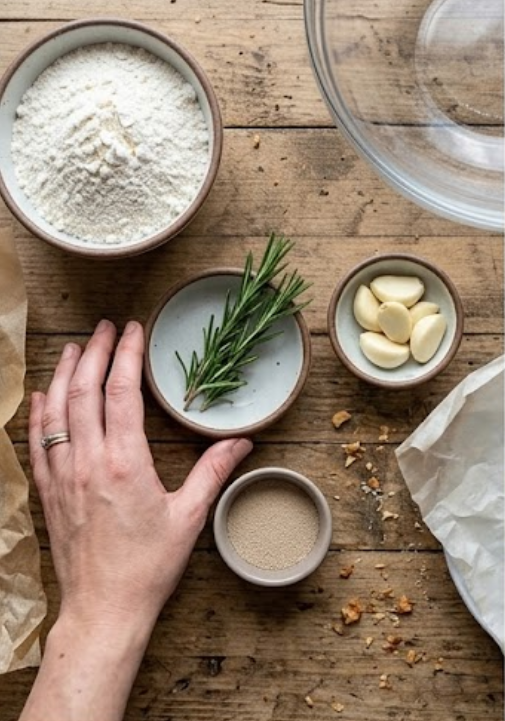
Ingredients for Your Rustic No-Knead Rosemary Garlic Bread Recipe
- 3 cups All-purpose or Bread flour (plus extra for dusting)
- 1.5 cups Warm water (about 105°F to 110°F)
- 1.5 teaspoons Sea salt
- 0.5 teaspoon Active dry yeast
- 2 tablespoons Fresh rosemary, finely chopped
- 4 cloves Garlic, minced or roasted
- 1 tablespoon Olive oil (for coating the bowl)
Recipe Overview
| Category | Duration |
| Total Time | 13 Hours 45 Minutes |
| Prep Time | 15 Minutes |
| Cook Time | 45 Minutes |
| Cool Time | 45 Minutes |
How to Master This Rustic No-Knead Rosemary Garlic Bread Recipe
Step 1: In a large mixing bowl, whisk together the flour, salt, yeast, and chopped rosemary. Ensure the yeast is evenly distributed throughout the dry ingredients before adding the aromatics.
Step 2: Add the minced garlic and warm water to the dry mix. Use a wooden spoon or a sturdy spatula to stir until a shaggy, sticky dough forms and no dry flour streaks remain.
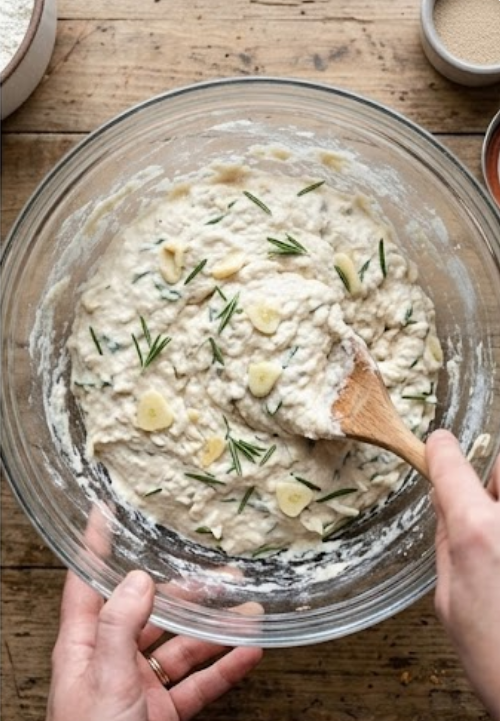
Step 3: Cover the bowl tightly with plastic wrap or a damp kitchen towel. Let the dough rest at room temperature (about 70°F) for 12 to 18 hours. This long rest is the “secret sauce” of the rustic no-knead rosemary garlic bread recipe.
Step 4: Once the dough has doubled in size and is covered in tiny bubbles, preheat your oven to 450°F. Place a heavy Dutch oven (with the lid) inside the oven as it heats for at least 30 minutes.
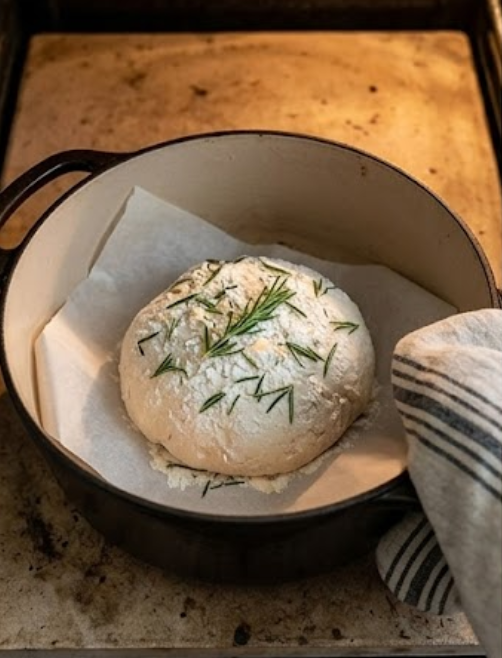
Step 5: Turn the dough onto a well-floured surface. Gently fold it over itself a few times—do not overwork it. Shape it into a rough ball and place it on a piece of parchment paper.
Step 6: Carefully remove the hot Dutch oven from the oven. Lift the parchment paper and drop the dough inside. Cover with the lid and bake for 30 minutes.
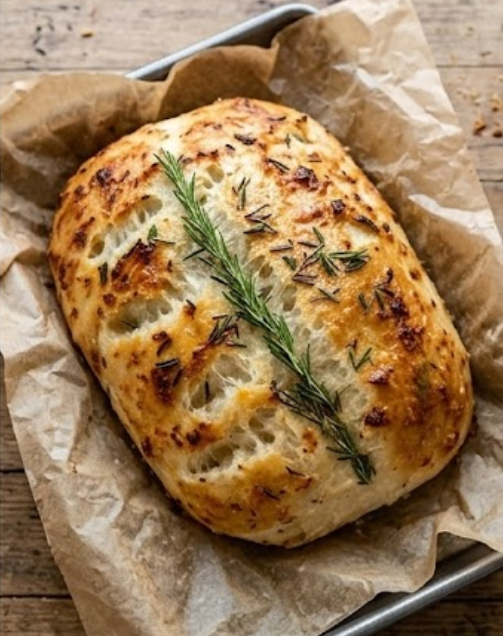
Step 7: Remove the lid and bake for an additional 12 to 15 minutes until the crust is deeply browned. Internal temperature should reach 200°F to 210°F. 🥖
Essential Tips for Success
When following a rustic no-knead rosemary garlic bread recipe, temperature and moisture are your best friends. Using a Dutch oven is crucial because it traps the steam escaping from the dough, which keeps the exterior soft long enough for the bread to expand fully. This results in that iconic “rustic” look with deep cracks and a crispy shell. If you don’t have a Dutch oven, you can place a pan of water on the bottom rack of your oven to create a similar steamy environment.
Nutrition Facts
- Calories: 165 kcal (per slice)
- Total Fat: 1.5g
- Carbohydrates: 32g
- Protein: 5g
- Fiber: 1.2g
- Sodium: 290mg
Serving and Storage Tips
This bread is best served warm, dipped in high-quality olive oil or spread with salted butter. To store, keep the loaf in a paper bag at room temperature for up to two days to maintain the crust’s integrity. For longer storage, slice the bread and freeze it in a sealed bag; simply toast the slices directly from the freezer to bring back that “just-baked” texture. 🧄
Frequently Asked Questions
Can I use dried rosemary instead of fresh?
Yes, but use only about 2 teaspoons of dried rosemary, as the flavor is more concentrated than fresh.
What if my dough doesn’t rise?
Check your yeast expiration date and ensure your water wasn’t too hot (above 115°F), which can kill the yeast.
Can I add cheese to this rustic no-knead rosemary garlic bread recipe?
Absolutely. Folding in a half-cup of cubed white cheddar or parmesan during Step 2 adds a wonderful savory depth.
Conclusion
There is nothing quite like the aroma of fresh herbs and garlic wafting through your home. This rustic no-knead rosemary garlic bread recipe proves that you don’t need professional equipment or years of experience to bake incredible bread. It is a forgiving, high-reward process that turns humble ingredients into something truly special.
If you try this loaf at home, let us know how the crust turned out or what extra ingredients you decided to fold in!