
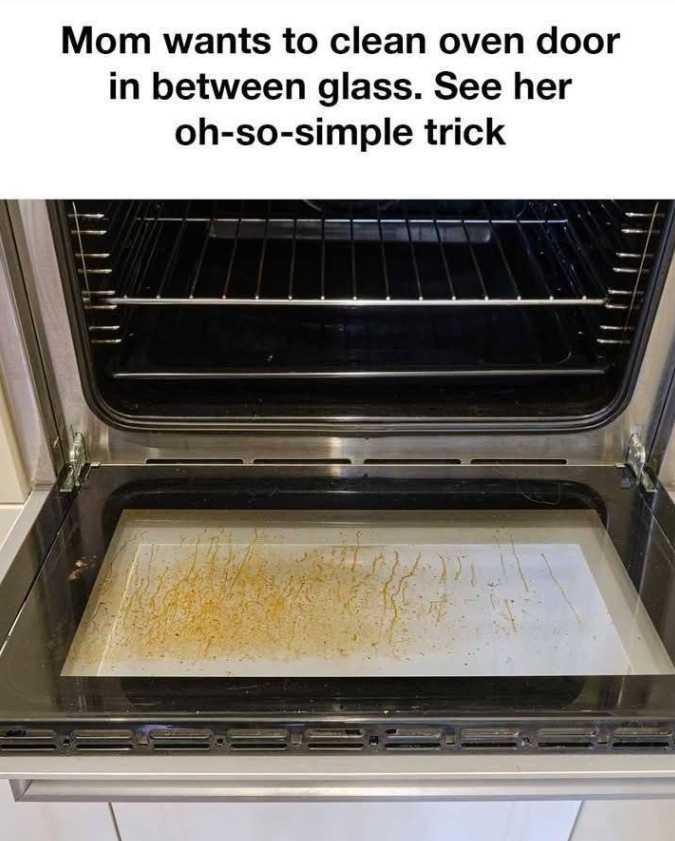
1. Locate the bottom ventilation slots: Open your oven door completely and look at the bottom rim or underneath the door assembly. Most modern ovens feature small ventilation slots designed for airflow, which offer direct access to the interior gap between the glass panels.
2. Assemble your custom cleaning wand: Unfold a wire coat hanger until it forms a long, straight wire with a small hook at the end. Wrap your microfiber cloth tightly around the hook end and secure it firmly with rubber bands so it does not slip off inside the door.
3. Apply your natural cleaning solution: Dampen the microfiber cloth with your white vinegar and water mixture (or a light baking soda spray). Avoid soaking the cloth excessively to prevent liquid from pooling at the bottom of the glass frame.
4. Slide through the ventilation gaps: Carefully slide the padded end of the wire wand through the ventilation slots at the bottom of the oven door. Gently maneuver the wand back and forth across the glass surfaces to wipe away grease streaks and trapped dust particles ✨.
5. Perform a final drying wipe: Replace the damp cloth with a clean, dry microfiber towel on your wire wand. Slide it back into the slots to absorb any remaining moisture and eliminate streaks for crystal-clear clarity.
Understanding Indoor Air Quality and Ovens
Medical experts and environmental specialists continuously emphasize the importance of maintaining clean kitchen appliances without relying on harsh commercial chemicals 🌿. When leftover grease bakes inside your oven at high temperatures, it degrades into smoke containing volatile organic compounds (VOCs) and fine particulate matter.
Using natural agents like baking soda and vinegar prevents toxic fumes from polluting your kitchen air while cooking, protecting vulnerable family members with asthma, allergies, or respiratory sensitivities.
Key Benefits of Using Natural Glass Cleaners
- Zero Toxic Off-Gassing: Prevents synthetic chemical fumes from burning off into your food during high-heat baking.
- Cost-Effective Maintenance: Eliminates the need for expensive commercial degreasers or professional appliance servicing.
- Surface Protection: Keeps the glass coating and door seals intact without abrasive etching or rubber degradation.
Safety Precautions and Common Mistakes to Avoid
Always ensure your oven is completely cool to the touch before attempting any cleaning procedures. Working on a warm oven door can cause thermal shock, which risks cracking or shattering tempered glass.
Avoid using metal scouring pads, steel wool, or harsh razor blades directly on the glass surface, as deep scratches can compromise structural integrity. Additionally, never spray liquid cleaners directly into the ventilation slots; always apply solutions to your cleaning cloth first.
Essential Metrics: Household Cleaning Solutions
- Baking Soda pH: 8.3 (Mild alkaline suitable for breaking down organic grease)
- Distilled Vinegar Acid Content: 5% acetic acid (Ideal for dissolving mineral spots and film)
- Optimal Cleaning Frequency: Every 3 to 6 months to prevent severe baked-on carbon accumulation
Long-Term Maintenance Tips for Clear Glass
To minimize deep cleaning frequency, wipe down the exterior glass and top ventilation rim after heavy cooking sessions once the oven cools down completely.
Ensure door seals remain clean and flexible so grease drops cannot easily seep past the rubber barrier into the inner panel assembly. Keeping a basic hood fan running while roasting oily dishes also reduces airborne grease deposits inside the kitchen space.
Frequently Asked Questions (FAQ)
Can I unscrew the oven door glass to clean it?
Yes, most manufacturer models allow you to remove the inner panel by unbolting the top door frame screws, but using a wire wand through the ventilation slots is much faster and avoids voiding warranties or misaligning door hinges.
Why does grease get trapped between oven glass panes?
Oven doors feature ventilation gaps along the top or bottom edges to allow hot air to circulate and prevent the exterior glass from overheating, which accidentally allows kitchen steam, dust, and grease particles to enter over time.
How do I remove stubborn burnt-on grease from the inside glass?
Apply a thick paste of baking soda and water directly to the burnt areas on the accessible inner glass pane, let it sit for 20 minutes, then spray with white vinegar and gently scrub away with a soft sponge.
A Clean Kitchen for Better Health
Keeping your kitchen appliances spotless does not require dangerous chemical fumes or complex disassembly. By learning how to clean oven door glass with simple, non-toxic household tools, you can easily eliminate unsightly grease stains and enjoy a cleaner, safer home environment.
Have you tried this clever cleaning trick on your own oven? Share your results and favorite natural home hacks with family and friends!




