
We moved quickly through the rooms. The master bedroom had been transformed. My clothes were neatly stacked in boxes inside the closet, replaced by David’s tailored suits. But the most unsettling discovery was inside the guest bedroom, where David had been sleeping.
The walls, stripped of my family portraits, were now covered in massive sheets of paper taped seamlessly edge-to-edge. Drawn across them in fine black ink was an elaborate, intricate diagram of my family tree. Photos of my daughter, my late father, and my ex-wife—the very pictures missing from my hallway frames—were pinned to the paper. Red lines connected my family members to dates, addresses, and medical records going back thirty years.
At the center of the diagram was a single, highlighted newspaper clipping from twenty years ago regarding a hit-and-run accident in downtown Milwaukee that had nearly taken my life. Beneath the article, written in small, precise handwriting, was a single sentence: He survived, but the debt remains.
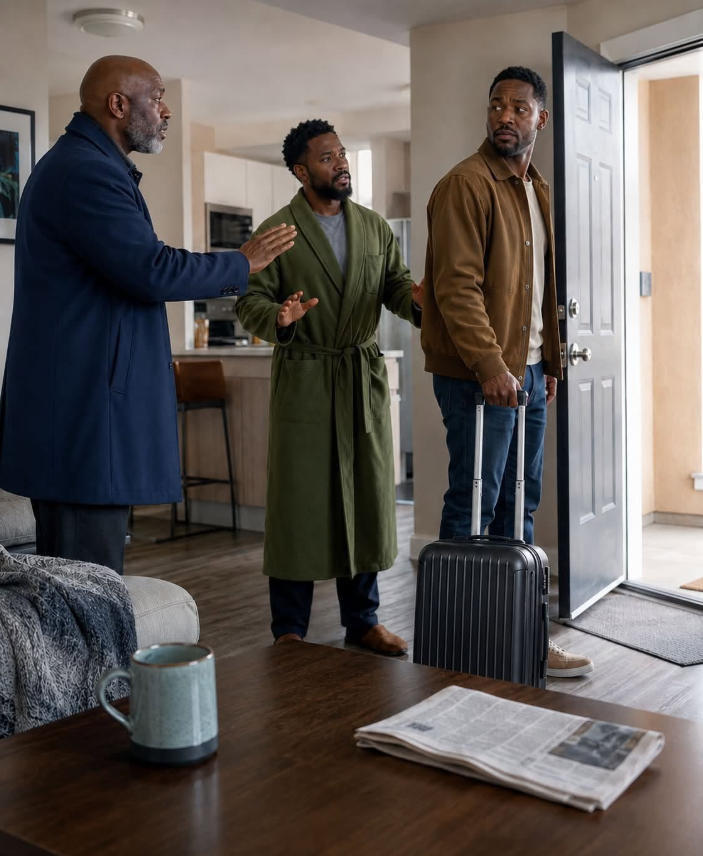
A sudden click echoed from the front entryway. The heavy wooden front door swung slowly open, and David Vance walked into the foyer, holding a bag of groceries. He froze, his eyes locking onto me as I stood in the doorway of the guest room holding his notebook.
The calm, articulate demeanor he had maintained for the police completely vanished. His face drained of all color, replacing his professional mask with a look of raw, unadulterated panic. For a long moment, nobody moved. The polished facade was gone, revealing the unstable reality hiding behind it, and I realized that my apartment had not been taken for shelter—it had been chosen as the stage for a long-awaited reckoning.




