
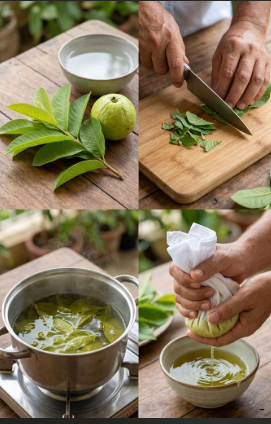
- 5 to 6 fresh, thoroughly washed guava leaves (or 1 tablespoon dried guava leaves)
- 2 cups of clean, filtered water
- A clean cotton cloth or soft compress towel
Preparation & Application Steps:
- Rinse thoroughly: Wash the fresh guava leaves under cold running water to remove any dust, debris, or contaminants.
- Boil the water: Bring the 2 cups of filtered water to a boil in a small stainless steel pot.
- Simmer the leaves: Add the leaves to the boiling water, reduce the heat, and simmer for 8 to 10 minutes until the water turns a light greenish-yellow tint.
- Cool down completely: Remove the pot from heat and allow the infusion to cool until it is comfortably warm to the touch.
- Apply externally: Soak your clean cloth in the warm infusion, wring out excess liquid, close your eyes tightly, and gently lay the warm compress over your closed eyelids for 10 to 15 minutes.
The Science Behind Guava Leaves for Eye Problems
Guava leaves (Psidium guajava) are rich in potent bioactive compounds, including vitamin C, flavonoids (like quercetin), carotenoids, and tannins 🍃. These nutrients offer strong antioxidant and anti-inflammatory properties when consumed as a tea or applied topically to intact skin.
Antioxidants help neutralize free radicals that cause oxidative stress throughout the body, including the delicate blood vessels supplying the eyes. When consumed orally as an herbal tea, the vitamin C and carotenoids found in guava leaves support system-wide vascular health, which indirectly aids in maintaining healthy ocular tissues over time.
What Guava Leaves Can and Cannot Do
When evaluating guava leaves for eye problems, managing expectations with medical accuracy is vital for your safety:
- What they CAN do: A warm compress made from guava leaf infusion can help relieve external eye fatigue, soothe surrounding eyelid skin, reduce mild swelling, and relax tired eye muscles after long hours of screen work.
- What they CANNOT do: Guava leaves cannot cure refractive errors such as nearsightedness, farsightedness, or astigmatism. They cannot reverse cataracts, cure glaucoma, or replace prescription spectacles or medical treatments prescribed by an optometrist or ophthalmologist.
Crucial Safety Warnings & Common Mistakes to Avoid
Your eyes are extremely sensitive organs that require sterile environments to prevent permanent damage or infection ⚠️.
- Never drip juice or tea directly into the eyes: Homemade infusions are not sterile. Dropping guava leaf juice directly onto the cornea can lead to fungal or bacterial keratitis, severe corneal ulcers, and potential vision loss.
- Avoid hot temperatures: Always test the temperature of your compress on the inside of your wrist first to avoid scalding the thin skin around your eyelids.
- Seek immediate medical care for severe symptoms: If you experience sudden changes in vision, severe eye pain, extreme redness, discharge, or flashes of light, consult an eye specialist immediately rather than relying on home remedies.
Nutritional Values & Active Compounds in Guava Leaves
Understanding the nutrient density of guava leaves helps clarify their systemic benefits for body and eye health:
| Compound | Primary Health Benefit |
| Vitamin C | Supports collagen integrity in ocular tissues and blood vessels |
| Quercetin & Flavonoids | Reduces inflammatory markers and combats oxidative stress |
| Carotenoids | Provides essential antioxidant support for macular cell health |
| Tannins | Offers mild astringency to help soothe swollen external tissues |
Long-Term Habits to Protect Your Eyesight
While incorporating guava leaves for eye problems as a soothing external compress or warm herbal tea can be a relaxing wellness habit, long-term visual health relies on proven daily practices:
Practicing the 20-20-20 rule is one of the most effective strategies against digital eye strain. Every 20 minutes, take a 20-second break to look at an object at least 20 feet away. Additionally, maintain balanced nutrition rich in leafy greens, wear UV-blocking sunglasses outdoors, stay well-hydrated, and schedule regular annual eye exams with a licensed professional.
Frequently Asked Questions
Can drinking guava leaf tea improve my vision?
Drinking guava leaf tea delivers valuable antioxidants like vitamin C that support overall vascular health, but it cannot fix structural vision issues like myopia or presbyopia.
Is it safe to wash my open eyes with guava leaf water?
No. Washing open eyes with non-sterile homemade infusions carries a high risk of bacterial or fungal eye infections. Always restrict herbal infusions to closed-eyelid external compresses.
How often can I use a warm guava leaf compress?
You can safely apply a warm compress over your closed eyelids once or twice daily to relieve muscle tension, puffiness, and dry eye fatigue after work.
Summary
Taking care of your eyes requires a balanced approach between soothing natural care and proven medical science. Using guava leaves for eye problems as a warm external compress offers a restful way to ease daily screen fatigue and relax tired eyelids. Pair this soothing remedy with healthy screen habits, balanced nutrition, and routine eye checkups to keep your vision clear and vibrant for years to come.




