
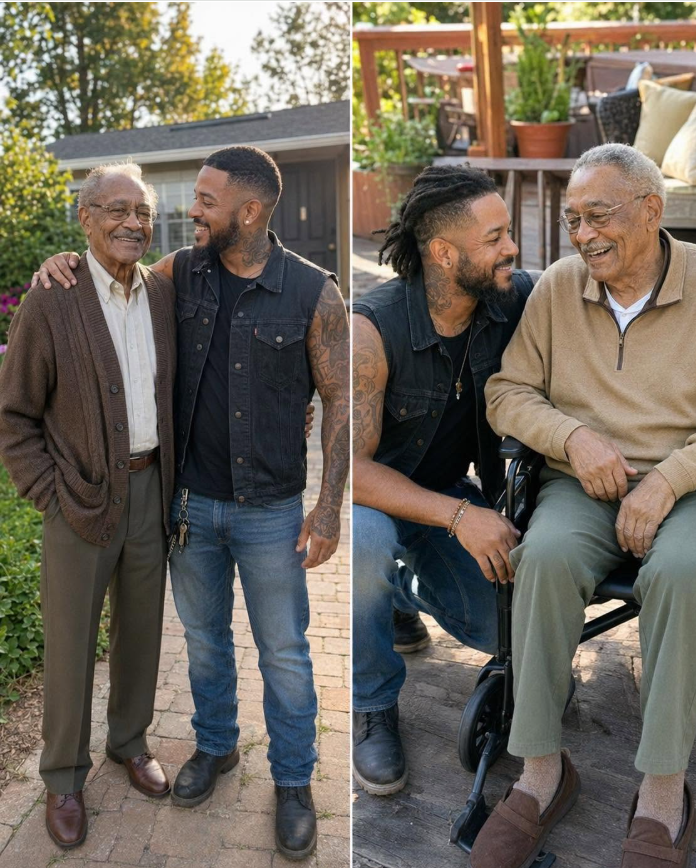
The Echoes of Willowmere Lane
Part Two of the Story… 👇
Unspoken Bonds
The date inked beneath my name at the top of the parchment read October 12, 2009—a full three years before the rainy afternoon I had crossed the street to help an elderly man with his fallen groceries. My thumb brushed over the yellowed paper, feeling the slight indentation of Elias’s neat, measured handwriting. The room around me felt unnaturally quiet, the ticking of the grandfather clock in the corner sounding louder with every passing second.
The letter began with a sentence that made my heart pause. “If you are holding this letter, Rowan, then it means I have finally taken my leave, and you have proven to me that true human kindness does not require a reason, a reward, or a audience.”
I leaned back against the kitchen chair, pulling the desk lamp closer to illuminate the delicate script. Elias went on to describe a night that had occurred nearly two decades ago, long before he ever moved to Ashvale. He wrote of a blinding winter blizzard on a deserted stretch of highway hours away from town. Elias had been driving his wife, Clara, home from a distant hospital where she had been receiving treatments. In the middle of nowhere, their car had broken down, the engine sputtering out against the subzero cold. With no cellular service in those days and no passing traffic, panic had set in. They were stranded, freezing, and helpless.
After nearly two hours of despair, a young mechanic in a battered pickup truck had pulled over. Without asking for a single word of explanation, the mechanic spent an hour in the freezing wind repairing the alternator, refusing any offer of payment. When Elias had desperately tried to slide a stack of bills into his coat pocket, the young man had simply smiled, shook his head, and said that he didn’t take money for doing what anyone ought to do. He told Elias that if he ever felt indebted, he should simply keep his eyes open for someone else who needed a hand down the road and pass the favor along.
The letter continued, and as I turned the page, my eyes welled with tears. The young mechanic who had saved Elias and Clara on that freezing highway was my father, who had passed away when I was still in high school.
Elias wrote that years later, after Clara had passed and he moved to Willowmere Lane to live out his remaining years in quiet solitude, he had recognized my last name on the mailbox across the street. He recognized my father’s quiet demeanor in the way I walked, the way I cared for my yard, and the reserved manner in which I kept to myself. But Elias was a proud man, and he did not want to approach me with a heavy burden of gratitude or an awkward explanation of the past. He wanted to know if the selfless warmth my father possessed had been passed down to me, or if the modern world had worn it away.
So, Elias had observed. He wrote that he spent months watching me from his window, observing how I interacted with neighbors, how I took care of stray animals, and how I carried myself. On that rainy Sunday twelve years ago, Elias had intentionally walked down to his driveway carrying heavy paper grocery bags, waiting to see what I would do. The dropped bag had not been an accident; it had been a quiet test of character.
“When you crossed that street without hesitation, picked up those scattered cans, and offered to carry them inside, you gave me something far greater than help with my groceries,” the letter read. “You restored my faith in the continuity of goodness. You proved that the light your father carried had not extinguished when he passed.”
My breath hitched as I reached down into the battered suitcase. Beneath the letter lay a thick, organized stack of grocery receipts, meticulously bound together by rubber bands and categorized by year. I picked up a bundle from seven years ago and turned over the top receipt. Written on the back in Elias’s familiar hand were brief, handwritten notes detailing our weekly visits.
“November 12th: Rowan seemed stressed about work today. Reminded him that storms always pass. Brought out the old apple cake.”
“April 3rd: Rowan helped fix the latch on the back door. We talked about his childhood. A good soul.”
“August 19th: Rowan brought over fresh tomatoes from his garden. We sat on the porch for two hours watching the sunset.”
Every single Sunday for twelve years was recorded on the back of those receipts. What I had viewed as a simple, neighborly chore had been carefully archived as a precious journal of companionship by an old man who had lost everyone else in his life.




